Tuesday, July 28, 2020

The Future of the Republican Party


     So, we are a little over two months from an election. As of now it looks like Trump will lose reelection, this raises an interesting question, what will the Republican Party become after Trump leaves office in either three months or four years?


    Firstly, let us talk about Trump. I think it is fairly non-controversial to say that Trump is not a typical Republican. An example of this is Trump has started trade wars, implemented tariffs, broke away from trade deals, and tried to renegotiate trade deals. Most Republicans are staunch defenders of the free market and are largely complacent with the status quo regarding trade. Trump is (at least rhetorically) against the wars in Iraq and Afghanistan and interventionist wars in general. Trump is comparatively more anti-immigration and arguably more in favor of regulating industry, such as tech and social media companies like Twitter, Facebook, and Google than typical Republicans. These are just a few examples where Trump, at least rhetorically breaks from the Republican Party.[1] Despite Trump being quite different from the average Republican politician, the Republican Party and its voters have largely fell in line and they mostly support him.[2] The question still remains what will happen to the Republican Party after Trump leaves office?


    I think a few things will happen simultaneously. The first is that there will be an almost civil war in the Republican Party over their identity. One of these groups will be Republicans and whites who feel disenfranchised by the ever-diversifying United States. These people will be more alt-right in their beliefs, rhetoric and actions and they will try and shift the Republican Party and its platform to be more far right and to try and more explicitly appeal to white people. The second group will be Republican and centrists who are dissatisfied with the Democratic Party. This group will try and shift the Republican Party to be more centrist and have them try to appeal to minority voters more effectively.


     The first group I mentioned will be comprised of many Trump-like imitator politicians who try and win state and local elections with campaigns and rhetoric that mimic Trump's. They will also be compromised of politicians who will be more explicitly alt-right in their policy goals, rhetoric, and actions than Trump is. This group will try and coop the Republican Party to further their beliefs, similar to what the Tea Party did in 2009. They will most likely use rhetoric and issues which will explicitly and implicitly appeal to white identity politics. They will also probably be comparatively less pro-capitalism, pro-globalism, and pro-free markets in favor of protectionism, regulation, and less immigration. I think like the Tea Party, they will be a mix of grass roots and astroturfed PACs, politicians, protests, radio shows, podcasts, and advocacy groups. Will they be successful?


     It is hard to say. There have been Trump-like figures both in their rhetoric and policies that have run for office in the US and abroad. One example is Faith Goldy in Canada, a few years ago she ran for mayor, with her slogan being "Canada first," which obviously suggests Trump and his "America First" campaign. She did lose her election with only receiving around three percent of the vote. Did she lose because she used Trump-like rhetoric and policies? Or did she lose because she was further right than Trump? Her failed campaign raises interesting questions, do people on the mainstream right like Trump because of his rhetoric and policies, or because they saw him as the only viable alternative to Hilary Clinton? We will get the answer to this question in the results of the 2020 presidential election. The biggest challenge for these Trump-like and alt-right aligned Republicans will face in actually winning elections will be balancing being too far right and too Trump-like in rhetoric with being able to appeal to the average Republican and centrist voters.


    The second thing which I think will happen in the Republican Party after Trump leaves power will be a group of Republican politicians, PACs, groups, podcasts, etcetera, etcetera, some grass roots and some not, shifting towards the center and trying to appeal to non-white voters (most likely Latinos and Hispanics). I could also see them trying to appeal to black voters through promising bipartisan efforts on police reform and criminal justice in general. Another group they may try and appeal to is Asian-Americans. One way they may do this is through pro-business legislation since many Asian-Americans are small-business owners. They could also potentially appeal to Asian-Americans through things like Affirmative Action reform since Affirmative Action has arguably negatively impacted Asian-Americans. This group of new Republicans will also probably be more Libertarian on certain issues like immigration, gun rights, taxes, government regulation and anti-terrorism. This group may also be more inclined to addressing climate change in substantive ways compared to more old school Republican politicians. The biggest problem this coalition of new Republicans will probably face is in actually appealing to minority voters for two main reasons. The first reason is that rightfully. or wrongfully, the Republican Party is seen as more racist than the Democratic Party. Another major issue this group will face is that if there is a vocal segment of alt-right aligned Republican politicians, they may have trouble distancing themselves from those alt-right politicians in the minds of voters and in how they are presented by left-wing media groups. Which would certainly negatively impact their appeal to minority voters.


    This is just describing how I think the Republican Party will react once Trump leaves office, not necessarily what I want them to do. Regardless of what will happen, the Republican Party has a great opportunity to remake themselves after Trump leaves and they would be foolish not to attempt to. Whether or not they actually will seize this opportunity remains to be seen.


[1] There have been a few Republican politicians and PACs which resist Trump, but Trump consistently polls at 80%+ with Republican voters, so for the most part other Republican politicians have supported the Trump administration and their policy goals.


[2] Despite Trump oftentimes using rhetoric where he paints himself as anti-establishment and as an outsider, policy wise he is fairly consistent with the more typical Republican lawmakers such as his tax cuts. This is why I said, “at least rhetorically breaks from the Republican Party."

Monday, June 8, 2020

Divinity and Kings:


The Mandate of Heaven was a concept in Chinese history used to justify the rule of their current emperor or dynasty. It stated that the current ruler was approved by the heavens or ancestor spirits to govern. The Mandate of Heaven could also be lost for a variety of reasons such as rebellions, invasions, usurpers, famines, and economic downturns. What is interesting is that China was far from unique in having divine or semi-divine rulers in fact, claims of divine or semi-divine rulers were extremely common historically. Perhaps the time periods where claims of divine or semi-divine rulers were the most common was from the bronze age to late antiquity, but even after the Christianization of the Roman Empire claims of rulers being uniquely connected to divinity persisted.

In the Bronze Age and antiquity, the claims of rulers or monarchs being divine, semi-divine, or uniquely connected to divinity was prevalent across the whole world. Examples include, Greek royal families, Persian kings, Mesopotamian kings, India’s caste system, Chinese dynasties, (perhaps most famously) the Pharaohs of Egypt, later Alexander the Great, his successors, Julius Caesar, Augustus, the emperors of Rome and countless others. Claiming to be divine or uniquely connected to divinity was extremely pervasive across the ancient world. Why did ancient monarchs claim descent or unique connections to divinity and why did their subjects or citizens tolerate these claims?

The simple answer to the first question is that claiming that one has a unique connection to divinity is powerful propaganda that can help legitimize a ruler and their reign.  If the ruler is truly uniquely connected to divinity, then it becomes completely justifiable as to why they would have special rights and privileges. If a ruler is connected to divinity, then they are also uniquely situated to communicate and potentially appease the gods. During war time it can also serve as effective propaganda, if your ruler is connected to divinity and your opponents is not, then the war becomes justifiable and it is almost guaranteed that your side will win. Another benefit for the rulers is that after conquering new territory, replacing local cults with cults to the ruler could help with integrating and assimilating the new subjects. The many benefits a ruler could gain from claiming that they are descended from gods, or that they have a special connection to divinities makes it an almost obvious choice to claim so, but the question remains, why would their subjects and citizens tolerate these claims?

An obvious, but perhaps unsatisfactory answer is that the common people believed these claims, if they were taught all their life that their king or pharaoh was descended from a god or gods, then who would they be to question it? A ruler would certainly seem extremely powerful and almost god-like in public appearances and the fact that their word was law. Additionally, it was quite common for rulers to host feasts and festivals for their subjects, so perhaps those ostentatious displays of wealth were sufficient to convince and placate the commoners, but what about other nobles and the priestly class who would probably be more familiar with the monarch and royal families? What would they gain from allowing a ruler to claim that they had a unique relationship to divinity? Would it not diminish their own legitimacy and power?

 One potential reason that other nobles and priests would be willing to accept rulers claiming to be divine was that it was mutually beneficial. For priests it may shift some of the duties and responsibilities of maintaining temples and other religious duties on to the royal family, thus saving them time and resources. Another reason is that when matters go wrong the monarch or royal family could be used as scapegoats. If the monarch or royal family does have a special relationship with divinity, then surely it is the royal families’ fault when there is a famine or when a war is lost. Another benefit could be that being ruled by royal families which claimed to have connections to divinity resulted in more stable societies. Although the adoption of Christianity and Islam would complicate how rulers could claim descent or connection to God, the idea continued to be prevalent in Medieval Europe and the Middle East even after the widespread adoption of those religions.

Obviously with the adoption of Christianity and later Islam a ruler or royal family could not claim descent from divinity since that would be blasphemy, so there was a shift in how rulers claimed connection to divinity. In the Christian world, this shift resulted in a tension between the Pope and Patriarch, the religious leaders in the Christian world and kings and emperors, the secular leaders in the Christian world. In the former Western Roman Empire and Central Europe, both kings, emperors and the Pope claimed to be put in their positions by God himself. These conflicting claims resulted in much tension between Popes and Holy Roman Emperors, and eventually fueled tensions leading up to and during the Protestant Reformation. In the Eastern Roman Empire, or Byzantine Empire, they created a concept called Caesaropapism, Caesar, or king over Pope. This idea explicitly stated that the emperor had the right to appoint the Patriarch, thus placing the emperor at the head of the church. A similar idea would later be utilized by the English crown and the Anglican Church.

As Enlightenment ideas spread and as monarchies in Europe and around the world began to be replaced by republics and democracies, there was a decrease in rulers and statesmen claiming to have special connections or relations to divinity. But the concept remained a powerful piece of propaganda that could be utilized. The German Empire and later the Nazis even had a slogan “Gott mit uns” or “God [is] with us” which continued to promote the idea that certain people or groups have unique connections to divinity and had God himself on their side. Even today in the US and around the world, the idea that certain groups or people in power have special relationships to God persists. In the Zionist movement, one justification for Jews settling in Israel/Palestine is that the Jews are supposedly “the chosen people” and therefore deserve to have complete dominion over Israel/Palestine. Perhaps a more subtle expression of this idea, that certain people and groups have special relations to God is in US presidential elections. Oftentimes candidates from both major parties will have campaign events at churches that will at least partially consist of priests blessing the candidates. US presidents also usually attend church services at least on Christmas and Easter and attend religious ceremonies for other religious groups on their holidays. Another example of this idea manifesting in current US politics is the close relationship between the Republican Party/politicians and Evangelical preachers. The idea that people in prominent positions in society have some sort of more direct or special relationship with God or divinity has not really gone away, it has just transformed and shifted to be more implicit than it once was.

Monday, August 12, 2019

Conspiracy Theory History

     Jeffery Epstein is in the news for two reasons, one is that he was connected to some very high ranking people and he was allegedly trafficking under-aged people. The other reason is that he allegedly killed himself. I say allegedly because many people believe that, that is not the case. Some potential reasons why this may not be the case is because he was connected to some of the wealthiest and most powerful people in the world, including a former president, Bill Clinton, and the current president, Donald Trump. Epstein was connected to many extremely powerful people, they would have the means and motive to take him out some how. But that is sort of besides the point, I believe conspiracy theories are becoming mainstream now. So let me introduce you all to what is called the conspiracy theory view of history. 
      In the field of history there are many different theories of history, Great Man theory, Marxist theory, Cyclical theory just to name a few. Each theory has its own merits and negatives, but I believe the most accurate theory of history is the conspiracy theory of history. What I mean by this is that history is a collection of conspiracy theories, some successful, but most ending in failures. Many of the most pivotal moments in history were the result of conspiracies. I know this may sound crazy or unbelievable, but it is true. Let me name just a few pivotal moments that were caused by conspiracies if you have doubts. 
       The Catiline conspiracy is not the earliest, but is perhaps the most well known earliest documentation of a conspiracy. A very short explanation of the Catiline conspiracy was that Catiline was a prominent Roman politician who lost an important election. He sent a message to Gallic Roman allies, asking them to invade Rome. In the ensuing chaos he wanted to cease power and become dictator of Rome. His plan was discovered, Cato was made dictator and he along with many of his accomplices were put to death. Another example of an early conspiracy was the betrayal and arrest of our Lord Jesus. Judas clandestinely met with Romans accepted money and lead them to where Jesus and the other disciples were. Those examples were from ancient history, but there are many from more modern times.  
      The founding of the United States was itself a successful conspiracy. The Founding Fathers met in secret, drafted the Deceleration of Independence and began to raise armies. All of which were considered treason by the ruling government. A fourth example is the official story of 9/11, before you start saying that I am crazy for thinking that 9/11 is a conspiracy theory just hear me out. It by definition was a conspiracy theory. A few extremists got together, took flying lessons then they discreetly made plans to hijack a plane. These are just four examples, from three different time periods, but there are many other examples of conspiracy theories being historical fact. 
     Like I said before, conspiracy theories are historical fact. Next time the official story does not quite add up, look into it yourself with an open mind.  In my opinion the fact that so many people are dubious about the Epstein suicide is a good thing. Conspiracies are more numerous then many would have you believe. The more that people are skeptical, the less we will be fooled by deception.  

Tuesday, January 1, 2019

Why I am a Christian:

  This post has been a long time coming, and what better time to post it then at the end of the Christmas Season, only days after the birth of the Messiah. Today I will be talking about why I am a Christian and the most persuasive arguments I have heard in favor of Christianity. I have put off writing this for some time because of a few reasons. Chief among the reasons is, that it is kind of embarrassing on my part to admit I am a Christian since I have flip-flopped on my spiritual or religious beliefs multiple times in the past few years. Another among the reasons is I am still working out my specific beliefs in regards to Christianity. But I have researched and read extensively about many of the worlds religions and philosophies, including but not limited to Greco-Roman paganism, Norse paganism, Hindu paganism, Islam, Judaism, Gnosticism and modern Occultism. A few things became clear to me, one God is real, and two Jesus is his Son. 
   One of the realizations that led me to Christ is that evil is real. This may seem counterintuitive at first, but let me explain. Evil is real. Material and spiritual evil exist and effect this world. This is obvious to all. It is why we are disgusted when we hear of a serial pedophile or murderer. We all know that evil exists. The Bible tells us that evil is real and is not of God. Many of the other religions and philosophies do not adequately address evil like Christianity does. 
      Another reason why I believe in God is that without one God there is no objective morality. This is not a new argument. Socrates made a similar argument in the Euthyphro, one of Plato's dialogues. Socrates states that "different gods consider different things to be just, beautiful, ugly, good and bad". If we presuppose that there is no god then what can we derive our morales from? Morality without God would essentially be about minimizing suffering and maximizing pleasure. 
     A purely subjective reason is the art inspired by Christianity and God is some of the most beautiful art ever created. Just listen to Lacrimosa! Or look at some of the many beautiful Renaissance paintings and sculptures.  


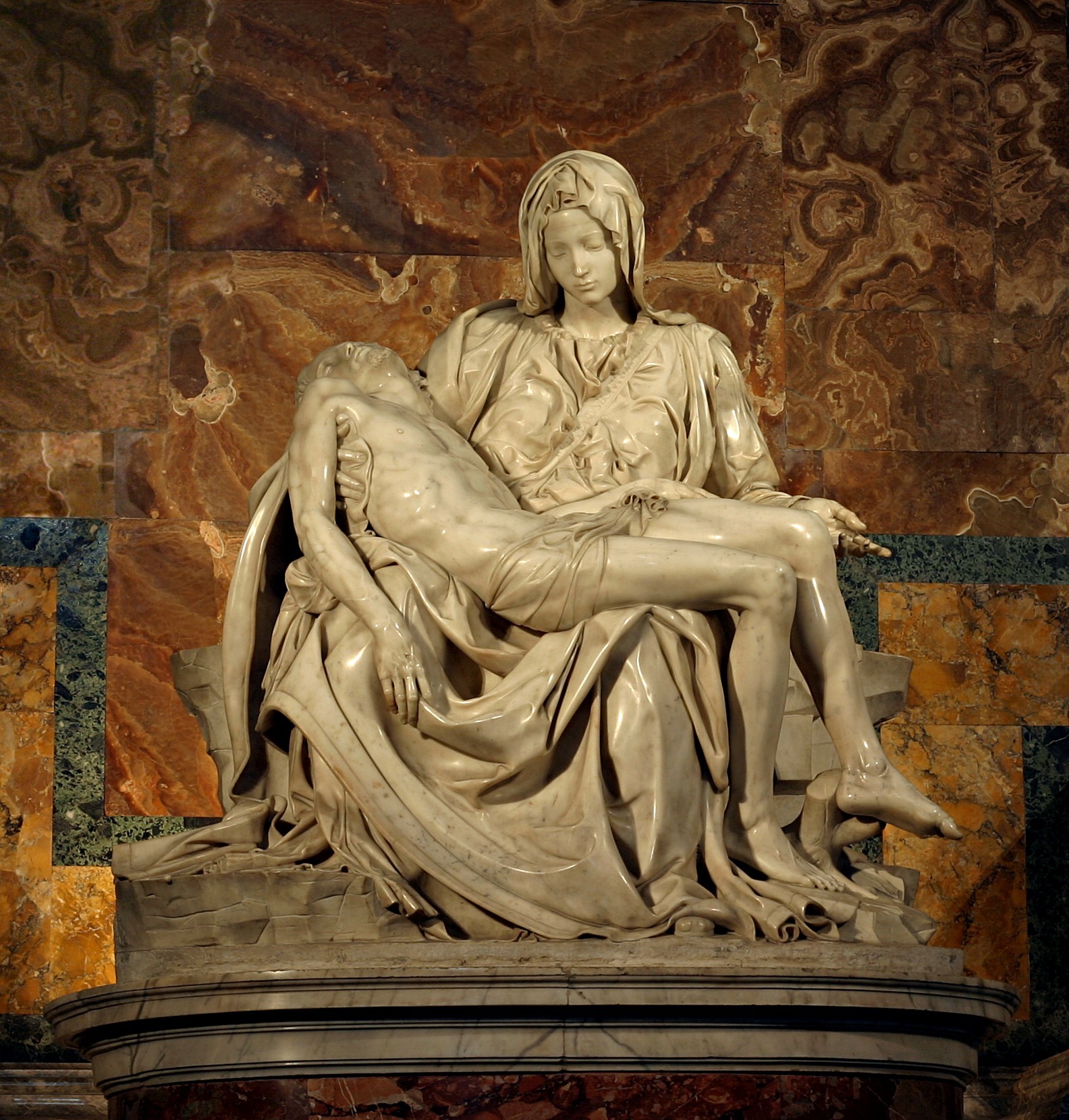
The art inspired by God is so beautiful that it makes you wonder if God created marble solely so that Michaelangelo could create The Pietà! The beauty of some art shows that we are made in the Divine image and that we can use our talents to create, which separates us from animals.
     I hope this post creates a compelling case for Christianity. There are other events and reasons that have happened, that have led me to Christianity. But those are more personal and in my opinion far less interesting and persuasive. Also I did not wish to have this post drag on too long. If there is interest then I will revisit this topic. I am excited about my new relationship with Christ/God and look forward to nurturing it in this new year, and beyond! God bless and happy new year! 


Friday, October 12, 2018

Social Constructs

       Often I will hear something referred to as a "social construct". Most commonly I will hear this said in regards to race, gender, marriage, but there are of course others. When people state that something is a social construct they frequently imply, if not outright state that because it is a social construct it is somehow less real or less valid than something that is not. This is completely untrue though. Just because something is a social construct does not make it any less real or any less valid than other things. 
      There is only one example needed to disprove this notion that social constructs are somehow less real than other things. The example I will use is the law.  The law is a social construct because a group of people agree that it exists and people act in accordance to the belief that it does exist. One cannot hold the law in their hands because it is not a physical object. Although, there are in fact physical objects that do represent the law. In America one example of this is the Constitution. If someone burned the Constitution then the US would not cease to exist and the laws of the US would not cease to be enforced. 

Monday, June 12, 2017

A Glimpse into a Depressed Mind:

    Usually I write about politics on this blog but I wanted to do something a little different this time. I wanted to talk about something that makes many people uncomfortable, Depression. I am sure many people have had friends or family who have suffered from depression, but still do not fully understand the phenomena. I admit I do not fully understand it either but as someone who was diagnosed with depression I feel qualified to talk about it. In the following paragraphs I will talk mainly about my own experiences but I will also draw from some of my friends experiences. Thankfully I have largely gotten over depression in my own life but I know there are others who are not as fortunate so I hope my experiences and observations will be helpful to others. 

   Recently it seems there has been a massive increase in depression diagnoses. I have two theories which are not mutually exclusive as to why depression has become so common recently. One reason depression has become so common recently is technology and society have evolved and changed at a rate much faster than our brains have. What I mean by this is that until relatively recently (circa end of WWII) there was a much higher chance of death and there was usually some sort of external threat (Ex. disease, invaders, famine, societal collapse, etcetera etcetera.) usually these threats would be only vaguely understood. My theory is that people need some sort of external threat or some sort of problem to be happy in life, and when there are not any external threats or problems people create or notice problems in their life. The other theory is leisure time and work. Now we have more leisure time than any other time in history except for maybe pre-agricultural times. People now have so much leisure time they struggle to fill it all with meaningful activities and become depressed. The other part to this theory is work. People now struggle to find meaning and happiness in their work because many people work in offices and cannot see how their work effects others. This may explain why there has been an increase in depression diagnoses, but there are other explanations as for why people get depressed. 

    I have noticed approximately four main reasons as to why people get depressed. Those reasons are as follows: 
I. One thinks there is something fundamentally wrong with themselves
II. One is deeply unhappy with their current life situation
III. One has suffered from some sort of major trauma 
IV. One thinks society is deeply unfair or unjust and feels helpless about it
These are the four main reasons one becomes depressed, their are of course other reasons but these in my opinion these are the four most common. Oftentimes people who are depressed are not just depressed because of one of these reasons but multiple. The reason I was depressed was because of mainly I and II. There are different ways to deal with each reason. 

     Reason One people get depressed is relatively hard to deal with because most people do not want to admit something is wrong themselves. Even if one does not want to admit it, one still knows it is true that there is something wrong with themselves. This thought is difficult to deal with because even if one goes to therapy the therapy will not help unless one is willing to admit what they think is wrong with themselves. Oftentimes people (me included) find it difficult to admit that there is something wrong with themselves and would rather blame other things for their problems. Dealing with something being fundamentally wrong with oneself requires hours of meditation, talking and actions to improve to fix. 

    Reason Two people get depressed is that one is unhappy with one's current life situation. This is difficult to deal with because sometimes why someone is unhappy with their situation is almost completely out of their control. Although even when it is in one's control it can still be extremely hard to actually change what it is that makes one unhappy. Sometimes people who are depressed will either consciously or unconsciously self sabotage. If one does start a cycle of self sabotage either consciously or unconsciously it is extremely hard to break the cycle. For example if one is depressed because they feel like they don't have friends this may lead them to taking actions that are counter-productive in the long run. In example of this is a depressed individual may feel like they do not have friends at school and are not liked by people their age. A short term solution to this is to quit after school activities and stop going to classes. This seems beneficial in the short term because the individual no longer has to deal with others that they perceive to dislike themselves. But this is negative in the long term. 

    Reason three people get depressed is that they have suffered from some sort of trauma examples include, rape, PTSD, survivor's guilt. I have no experience with this so I cannot pretend to understand this. But I would imagine that this would be extremely hard to deal with in ways that the others are not. I do not wish to dwell on this because I don't want to get anything wrong or offend someone who has suffered from one of those afflictions. 

  Reason four people get depressed is that they think the way society is set up is unfair/unjust and there is little to nothing they can do to change it. This realization is extremely dangerous for multiple reasons. Reason one is because it is true. Reason two is that this realization can often lead to people committing horrendous acts such as shooting up schools and killing innocents. That realization can lead to a twisted logic that makes shooting up schools seem desirable. The logic goes as follows, the whole system is corrupt and unfair and causes me to suffer, so I should make others suffer as much as I do so they will know how pointless everything is. When you look at the notes left behind by people like the Batman movie shooter, and those who did Columbine you get very similar sentiment to that. 

   In my opinion the main way in which a depressed mind is different from a mind that is not depressed is that the depressed mind is hyper aware of the negative. To me it is similar to Narcissism where instead of thinking oneself is great and having a massive Ego it is the opposite where they are overly negative in one's perception of oneself. If properly managed it can actually be a positive thing, but oftentimes it is not properly managed and those thoughts lead to people being trapped in a cycle of depressing thoughts. Once trapped in a depressive cycle it is extremely difficult to escape. The oftentimes seemingly impossible escape from depression often leads people to suicide. Suicide happens when a depressed individual believes that the only way to end their suffering is their death. Many people try and blame suicide on the people close to the individual who committed suicide. But the truth is those people can only be blamed if they were bullying, harassing and telling the person to kill themselves. In most other cases the person who commits suicide bears the blame for they made a conscious decision full well knowing what the results of that decision would be. That is not to say people should resent those who kill themselves, but those close to someone that has killed themselves 90% of the time bear zero blame for the decision that was made.